
Sambal Goreng Telur – Indonesian Eggs in Spicy Chili Sauce
This post may contain affiliate links. Please read the disclosure policies for details.
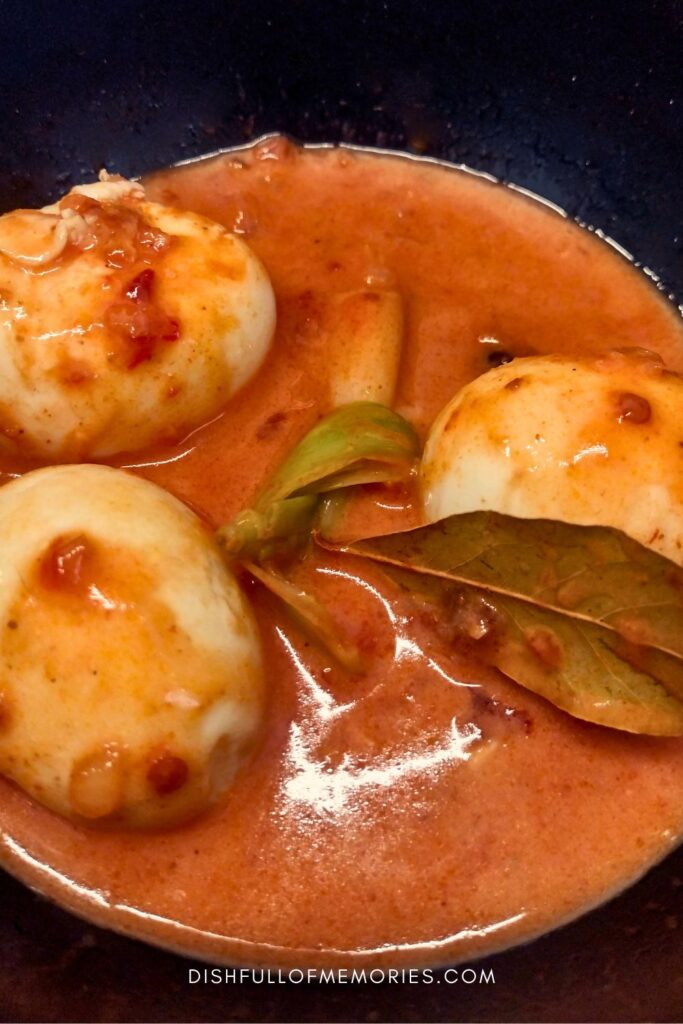
Sambal Goreng Telur (Sambal Goreng Telor) is a traditional Indonesian dish of hard-boiled eggs simmered in a spicy and aromatic chili coconut sauce.
The combination of heat from the sambal (chili paste), the creamy texture from the coconut milk, and the tangy sweetness of tamarind creates a rich, complex flavor that’s a staple in Indonesian cuisine.

The dish begins by preparing a spice mix, known as bumbu, which is fried in oil to release its flavors. Coconut milk and other ingredients are combined to create a rich, flavorful sauce. Hard-boiled eggs are lightly fried, then simmered in this sauce until they’re well-coated and infused with the aromatic blend of spices.
The term “goreng” means “fried,” referring to the eggs being lightly fried before being simmered in the sambal sauce. This step adds a unique texture and helps the sauce cling to the eggs. Be careful not to fry them too long or too hot, or the eggs may become rubbery. If you prefer, you can skip the frying step.

Ingredient Notes
- Kemiri nuts (Candlenuts): Used to add rich, creamy texture and a subtle, nutty flavor to dishes. They are typically ground into a paste and used in sauces, curries, and sambals. Kemiri nuts are toxic when raw and must be cooked before consumption. If unavailable, macadamia nuts can be used as a substitute.
- Daun Salam (Indonesian Bay Leaves): This has a subtle, slightly earthy flavor. Unlike the more aromatic Western bay leaf, daun salam is milder and adds a delicate, savory depth to traditional recipes. Commonly substituted by the regular bay leaves, but the flavor will be different. I would advise to not use it if you don’t have actual daun salam.
- Gula Jawa (Unrefined Palm Sugar): A natural sweetener made from the sap of palm trees. It has a sweet, rich, caramel-like flavor and is commonly used in Indonesian dishes. Use coconut or brown sugar as substitutes.
- Terasi (Fermented Shrimp Paste): Adds depth and umami. It is made from shrimp that has been salted, fermented, and then ground into a paste. It has a strong (stinky) smell that fades during cooking, leaving a savory taste. Fish sauce or anchovy paste can be used as a substitute, though it will slightly change the flavor.
- Sereh (Lemongrass): A staple in Indonesian cooking. Typically bruised and added to the dish during cooking, then removed before serving.
- Sambal Oelek (Chili Paste): Made from fresh red chilies, salt, and sometimes a bit of vinegar or lime juice. It serves as a base for many other types of sambals and is widely used in Indonesian cuisine to add heat. Adjust the amount of sambal to control the dish’s spiciness. Substitute with any hot chili paste or sauce like Sriracha, though the flavor profile will vary.
If you want to make your own sambal oelek from scratch, check out my easy sambal recipe here!
If you love Indonesian egg dishes, check out Bumbu Bali Telur, another delicious recipe to try.

Sambal Goreng Telur (Spicy Eggs)
Try this traditional Indonesian Sambal Goreng Telor recipe with hard-boiled eggs simmered in a rich, spicy chili coconut sauce. Perfect for a flavorful Asian meal!
These eggs are often served as a side dish, plan for at least one egg per person.
Fits low-carb, keto, and gluten-free diets. For a vegetarian version of this dish, leave out the terasi shrimp paste.
Ingredients
- 6 hard-boiled eggs
- 2 shallots, finely chopped
- 2 garlic cloves, minced
- 2 roasted candlenuts (kemirie), crushed into powder
- 2 Indonesian bay leaves (daun salam)
- 1 lemon grass stalk (sereh)
- 1 tsp shrimp paste (terasi udang)
- 1/2 tsp tamarind paste
- 1 tsp unrefined palm sugar (gula jawa)
- 2 tsp chili paste (sambal oelek)
- 1 tsp galangal powder (laos)
- 200 ml coconut milk
- 1 tbsp tomato paste
- 1/2 teaspoon salt
- oil for frying
Instructions
- Hard-boil the eggs and peel them after cooling them in cold water.
- Heat a layer of oil in a pan and fry the eggs until golden brown.
This step is optional but helps the sauce stick better to the eggs. Be careful not to overcook; the oil shouldn’t be too hot, as this can make the eggs chewy. - To make the bumbu spice paste, chop the shallots and mince the garlic. Roast the candlenuts, then grind them into a powder.
- Add shrimp paste, tamarind paste, sambal, salt, galangal powder, and tomato paste. Use a mortar and pestle, or a food processor to grind the ingredients into a smooth paste.
- Heat oil in a pan and sauté the bumbu spices until fragrant.
- Pour in the coconut milk and stir until combined. Add the daun salam bay leaves. Tie a knot in the lemongrass stalk, bruise the thick end, and add to the mix. Add the palm sugar and simmer for a few minutes.
- Add the hard-boiled eggs to the sauce. Simmer for 10-15 minutes, allowing the eggs to absorb the flavors. Stir the sauce and spoon it over the eggs occasionally.
- If the sauce becomes too dry, add a little water.
- Remove the lemongrass and daun salam leaves from the sauce.
- Taste the sauce and adjust the seasoning with more salt, sugar, or chili paste if needed.
Notes
Store any leftovers in an airtight container in the fridge for up to 3 days.
Nutrition Information:
Yield: 6 Serving Size: 1Amount Per Serving: Calories: 220Total Fat: 18gSaturated Fat: 8gTrans Fat: 0gUnsaturated Fat: 8gCholesterol: 188mgSodium: 255mgCarbohydrates: 9gFiber: 1gSugar: 3gProtein: 8g
The nutritional information provided is automatically calculated. These figures should be considered estimates.


