
Asinan Mangga – Indonesian Pickled Mango Salad
This post may contain affiliate links. Please read the disclosure policies for details.
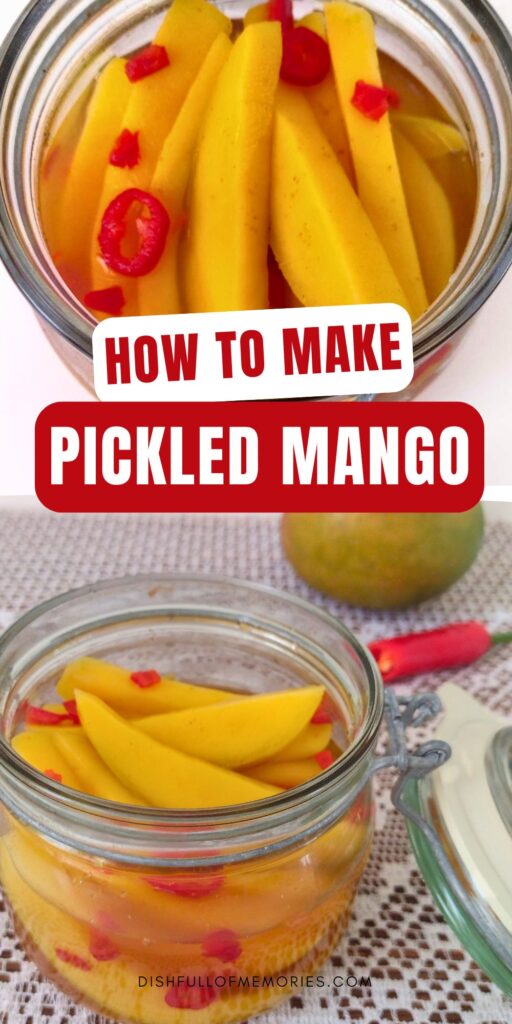
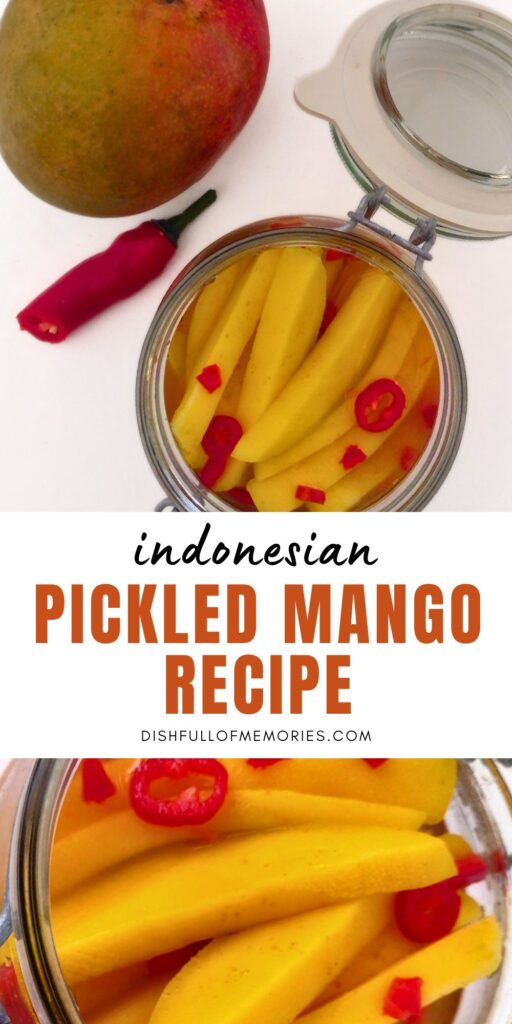
Asinan Mangga is a simple yet flavorful pickled mango dish that balances sweet, sour, and spicy flavors typical of Indonesian cuisine. It’s a versatile snack or side dish that requires no cooking, making it super easy to prepare.
Traditional Asinan Mangga features unripe mangoes marinated in a tangy, sweet, and slightly spicy brine. It’s a vibrant mix of flavors: the tartness of the unripe mango as the base, with tamarind paste and vinegar adding sour notes. A bit of sugar balances the flavors with a touch of sweetness, and chili pepper gives it a spicy kick.
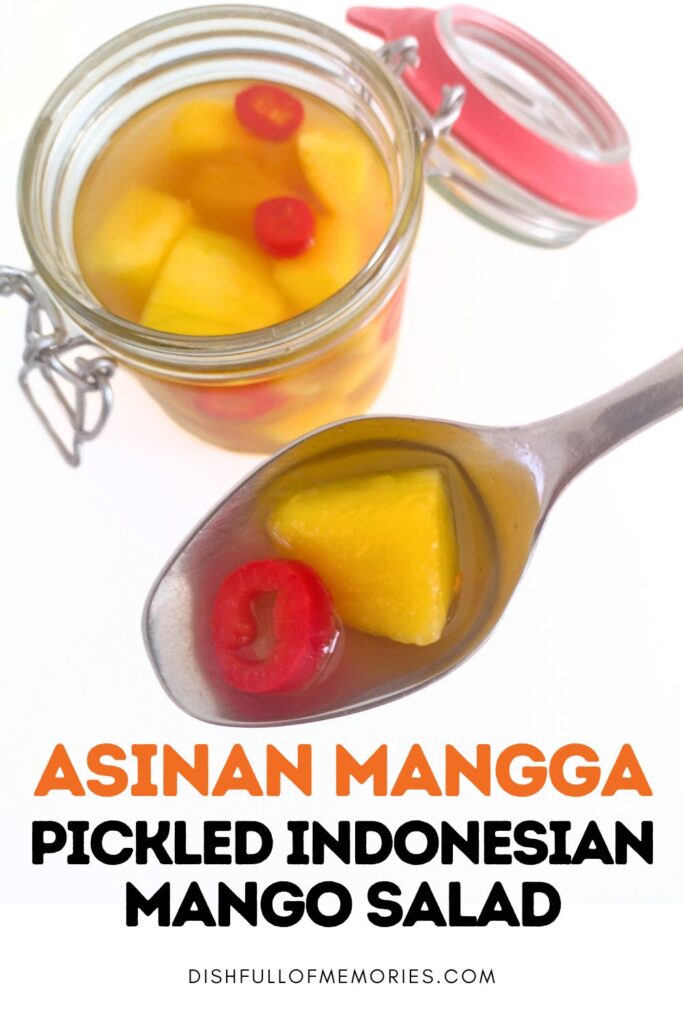
In Indonesia, “Asinan” refers to pickled fruits or vegetables, derived from the word “asin,” meaning salty. “Mangga” means mango, so Asinan Mangga literally translates to “pickled mango.” Despite the name, this dish is more of a marinated fruit salad rather than a traditional pickle, as it does not involve any heating or cooking.
Asinan mangga is a popular street food, sold by street vendors and enjoyed as a refreshing, spicy fruit salad on the go. Street vendors often sell it in plastic bags for convenience, where larger mango slices are soaked in the tangy, spicy brine, and the bag is tied at the top for easy handling.

How Asinan Mangga is Prepared
Preparation is simple and straightforward. The unripe mango is sliced and then soaked in a cold, spiced brine made from vinegar, sugar, tamarind paste, and chili pepper. This mixture is left to marinate, allowing the mango to absorb the flavors over time. Because there’s no heating involved, the mango retains its crisp texture, making it a quick and easy dish to prepare.

Not a fan of mangoes? Try the traditional Acar Ketimun (pickled cucumber) or Acar Timun Nanas (pickle with pineapple).
Asinan vs. Acar
While both Asinan and Acar (achar) can be very similar and are integral to Indonesian cuisine, there are some key differences.
Acar typically involves heating the brine to dissolve the salt and sugar and to infuse the spices thoroughly, making it a more traditional pickling process. While Asinan is a cold, marinated dish.
Acar is often served as a side condiment, and more common across various regions in Indonesia. Asinan is a side dish or eaten as a snack, and is particularly popular in urban areas, particularly Jakarta.

Ingredient Notes
Use unripe mangoes instead of ripe ones. They’ll stay fresh and crunchy in the pickling brine.
Tamarind paste is a tangy, dark brown concentrate made from tamarind fruit, used to add a rich, sour, more complex flavor. It’s a key ingredient in many Indonesian recipes. A common substitute could be lemon or lime juice, but those won’t replicate the exact taste.

Spicy Pickled Mango Salad (Asinan Mangga)
This Indonesian pickled mango salad is easy to make and packed with flavor. Raw mango is soaked in a spicy, tangy brine, creating a refreshing tropical snack. This recipe is perfect for those who love bold flavors. No cooking necessary!Fits gluten-free, vegan, and vegetarian diets.
Ingredients
- 1 unripe mango
- 1 tablespoon sugar
- 1/2 chili pepper
- 1/2 teaspoon salt
- 1 1/2 teaspoons tamarind paste
- 150 ml water
- 2 tablespoons vinegar
Instructions
-
Peel and slice the unripe mango into thin strips or small chunks.
-
In a bowl, combine the sugar, salt, vinegar, water, and tamarind paste. Stir well until the sugar and salt are completely dissolved and the tamarind paste is fully incorporated. Add the sliced chili pepper to the mixture.
-
Pour the brine dressing over the mango slices and mix well to ensure the mango is fully submerged.
-
Cover and refrigerate for at least 2 hours, preferably overnight, to let the flavors develop.
-
Serve chilled, straight from the refrigerator. Enjoy as a tangy and spicy snack or side dish.
Notes
If you have leftovers, store them in an airtight container in the refrigerator for up to a week. It could last even longer if you make sure the mango is submerged in the vinegar brine, and always use clean utensils to prevent it from going bad.
Nutrition
Per serving (1)
- Calories
- 137 kcal
- Carbs
- 34 g
- Protein
- 2 g
- Fat
- 1 g
- Fiber
- 3 g
- Sugar
- 31 g
- Sodium
- 535 mg
Recipe by Deborah Green


